COCOON
COCOON commits to one unusually strong idea: the object you carry can contain the place you need to enter. Its puzzles develop that relationship with admirable clarity and very little interface clutter.

Game facts
- Developer
- Geometric Interactive
- Publisher
- Annapurna Interactive
- Released
- 29 September 2023
- Platforms
- Windows (Steam edition)
- Model
- Paid game
- PEGI
- 7 · Violence, Fear — Steam UK listing
- Players
- Single-player
- Length
- Short
- Difficulty
- 3 / 5 · Moderate
- Steam Deck
- Verified
PEGI source ↗ · Steam Deck status source ↗
Edition: Base game
The score, explained
The interest and responsiveness of the core decisions and actions.
How progression, exploration and goals fit together.
The coherence of the visual, musical and narrative presentation.
How clearly the game explains its rules and offers useful ways to engage.
The depth of optional goals, alternative approaches and reasons to return.
The First Hours
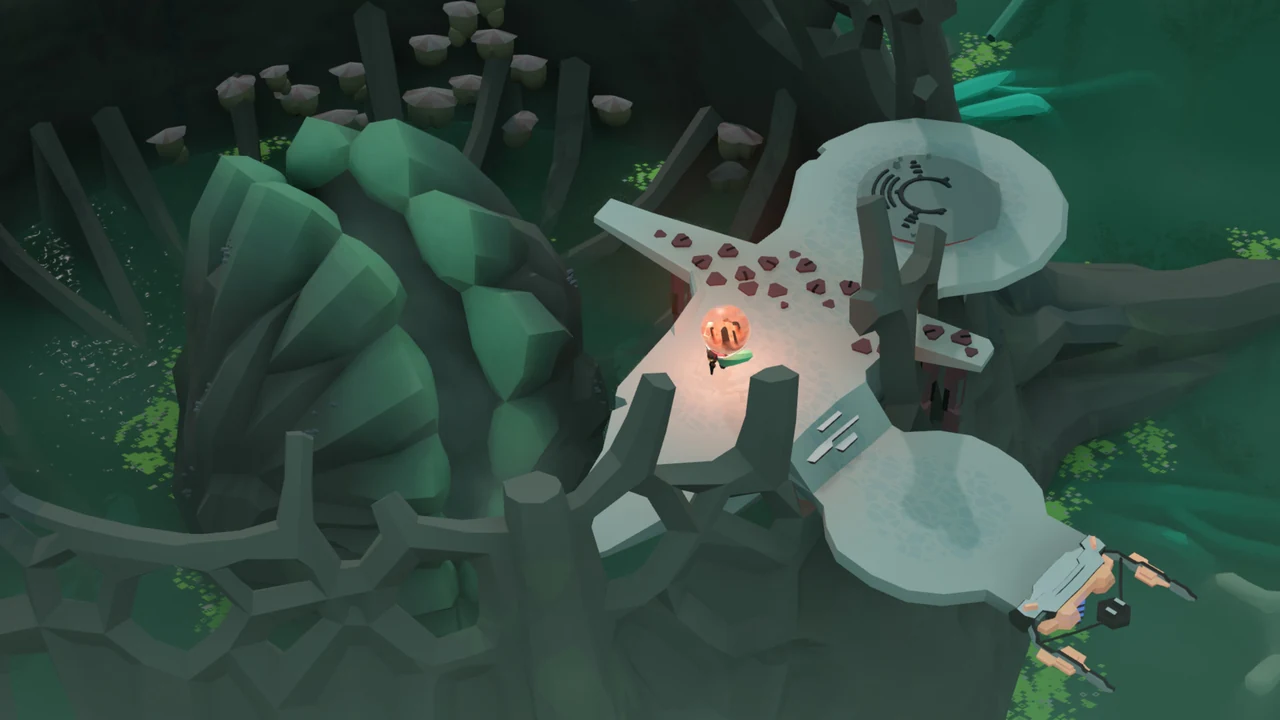
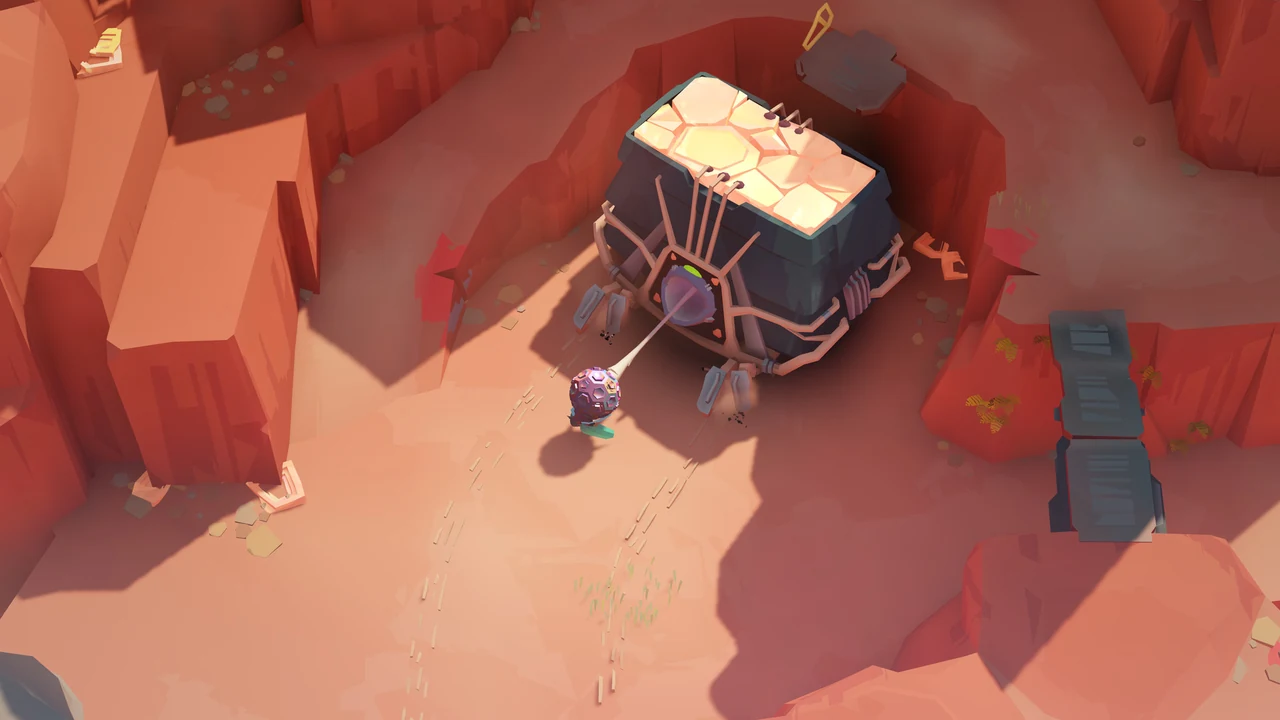
COCOON gives you an orb to carry and gradually reveals that carrying it is only part of its purpose. Worlds can be entered, left and transported within other worlds, making the relationship between object and environment the central puzzle. The opening relies on movement and interaction rather than a large vocabulary of controls. You learn where an orb can be placed, how it changes the surrounding machinery and when entering it will alter the problem you are trying to solve. That simplicity is valuable because the spatial relationships soon become less simple. A route may depend on where something has been left in another layer. The game teaches attention to those relationships before asking you to coordinate several of them in a longer sequence.
Why It Works
The orb idea is productive because it changes the meaning of an ordinary action. Carrying an object across a room can also mean relocating an entire environment, and placing it in a socket can reorganise the route through several spaces. Different orb abilities give the worlds practical identities, rather than leaving them as interchangeable containers. COCOON's visual language does much of the instructional work: shapes, pathways and responsive machinery communicate what can be connected. The small control set keeps the difficulty centred on understanding those connections. This makes the design unusually cohesive for an indie catalogue entry. Instead of supplementing a thin puzzle idea with numerous unrelated features, it keeps discovering new consequences of the relationship that made the opening intriguing in the first place.
Where It Stumbles
The journey is more directed than its strange worlds initially suggest. Most spaces exist to support a particular chain of solutions, so there is limited room to develop an alternative strategy or personalise the way you progress. When the intended relationship is not apparent, experimentation can narrow into carrying the same orb between a handful of plausible positions. Holding several nested spaces in mind also asks for a kind of concentration that the minimal controls might disguise. The occasional confrontation changes the rhythm further by demanding more immediate reactions. None of this undermines the central idea, but it does define its limits: COCOON is a carefully arranged puzzle journey, rather than a flexible construction system or an open landscape full of independent routes.
Who Should Play It
Choose this when you want a puzzle game to develop a strong concept thoroughly and then bring it to a conclusion. COCOON is especially attractive if relationships between spaces are easier for you to think about than written clues or numerical rules. It is also a useful counterpoint to sprawling adventures whose many systems compete for attention. Players who enjoy inventing their own solution method may prefer a more open puzzle sandbox, while those who dislike mentally tracking nested locations should expect moments of friction. The recommendation rests on concentration rather than quantity. Its relatively small set of actions supports a distinctive succession of problems, and the alien worlds feel purposeful because their visual identities are tied to the work those problems require.
The verdict
COCOON commits to one unusually strong idea: the object you carry can contain the place you need to enter. Its puzzles develop that relationship with admirable clarity and very little interface clutter.
Reasons to play
- Nested worlds create useful spatial questions
- Orb abilities connect puzzles across separate spaces
- Clear interaction rules support increasingly complex arrangements
Reasons to think twice
- The solution route is deliberately constrained
- Keeping nested relationships in mind can become demanding
See the game
Assist & accessibility
Explore the available settings and control options on the official game page before choosing your setup.
Parents’ guide
Players: Single-player. No in-game purchase marker in the checked Steam listing. Separate downloadable content may be sold.
Age classification: 7. Violence · Fear Steam UK listing
A useful starting tip
When an arrangement seems impossible, reconsider which world should contain which orb before searching for a new switch.
A different direction
Compare this with Chants of Sennaar: Chants of Sennaar makes understanding other people the central form of progress. Its notebook turns uncertain observations into testable language hypotheses, giving patient deduction a clear structure.
Official sources
Reviewed: November 2026
You might also like
 DorfromantikRead review →
 PentimentRead review →
 CupheadRead review →
REFERENCE CARD