Dorfromantik
Dorfromantik makes a convincing case for a small idea developed with care: placing one tile can improve the view and complicate the next decision. Its scoring rules give the peaceful presentation a welcome backbone.
Game facts
- Developer
- Toukana Interactive
- Publisher
- Toukana Interactive
- Released
- 28 April 2022
- Platforms
- Windows · macOS (Steam edition)
- Model
- Paid game
- PEGI
- 3 — Nintendo Switch edition; not a separate PC classification
- Players
- Single-player
- Length
- Medium
- Difficulty
- 2 / 5 · Approachable
- Steam Deck
- Verified
PEGI source ↗ · Steam Deck status source ↗
Edition: Base game
The score, explained
The interest and responsiveness of the core decisions and actions.
How progression, exploration and goals fit together.
The coherence of the visual, musical and narrative presentation.
How clearly the game explains its rules and offers useful ways to engage.
The depth of optional goals, alternative approaches and reasons to return.
The First Hours
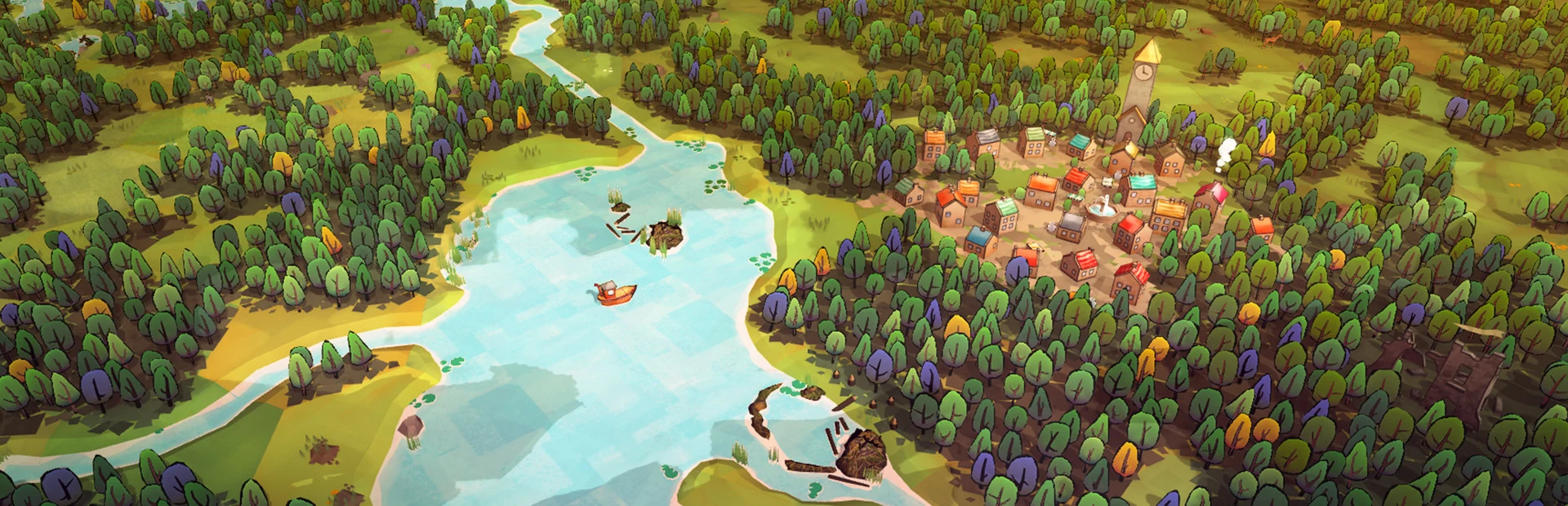
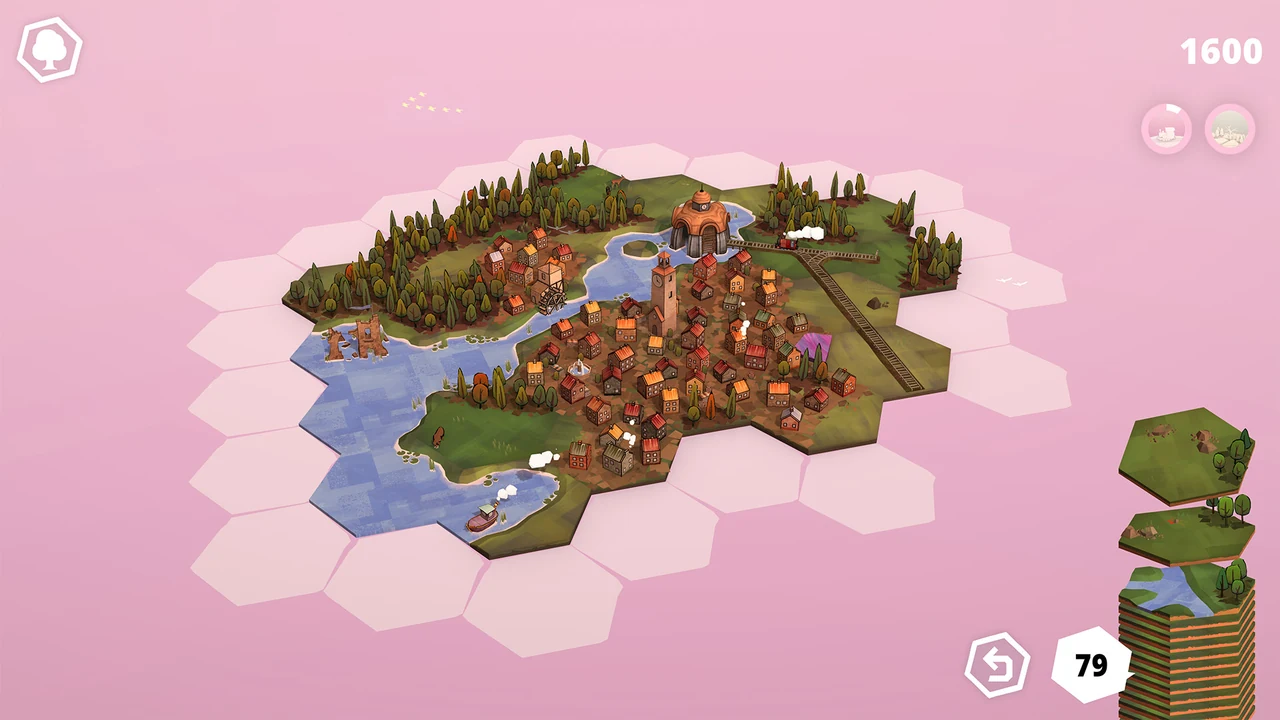
The first useful distinction is between building a landscape and managing a town. Dorfromantik asks you to place hexagonal tiles containing fields, houses, forests and transport routes. You rotate a piece, examine its neighbours and commit to a position. There are no citizens demanding a school or production chains waiting for fuel. Instead, individual objectives ask for connected groups of particular sizes, while matching edges and completing tasks support the supply of further tiles. That gives a pleasant little countryside an immediate practical dimension. A picturesque arrangement can be awkward to extend, and an unglamorous placement can protect a valuable route. Learning to see both possibilities is the real opening lesson, rather than mastering a complicated set of construction menus.
Why It Works
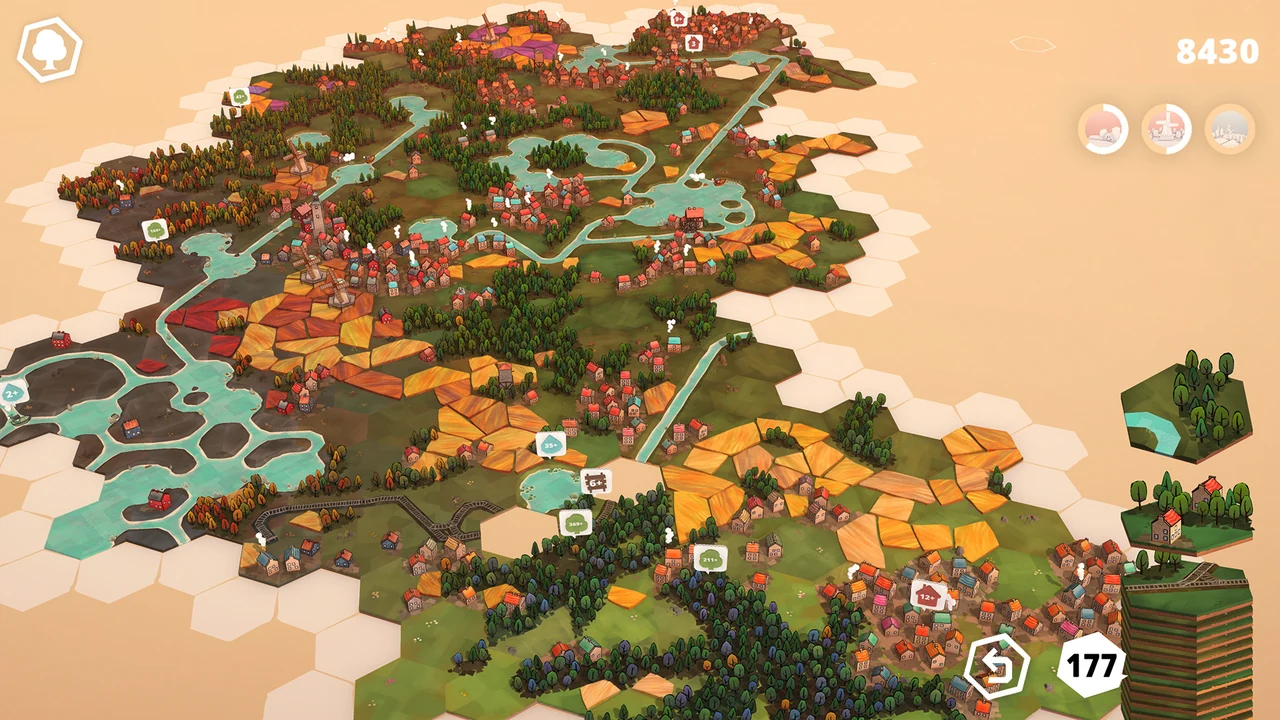
The strongest idea is that each decision leaves a visible record. A spreading forest is simultaneously scenery, a potential objective and a shape that constrains later placements. You can read the consequences directly from the board instead of inspecting a separate economy screen. Tile rotation provides enough freedom to make placement thoughtful without making every turn feel like a construction project. Objectives also introduce competing scales of attention: the immediate tile, the cluster it touches and the land still available around that cluster. Dorfromantik therefore earns its place in an indie catalogue through concentration. It repeatedly finds useful decisions inside a narrow set of actions, while its animated trains and small settlements give those decisions a surprisingly inviting physical presence.
Where It Stumbles
The landscape does not always cooperate with the picture in your head. A scoring opportunity may encourage an awkward shape, and a sequence of inconvenient tiles can frustrate a carefully imagined plan. Players expecting unrestricted decoration should understand that this tension is part of the central game. There is also a limit to how much novelty the basic loop can supply. New arrangements change the puzzle, but they do not introduce the dramatic shifts of a story campaign or the interlocking responsibilities of a city simulator. A session can consequently feel complete before every possible improvement has been pursued. Its quiet presentation softens those repetitions, although a reader seeking a succession of major discoveries may still find the experience too consistent.
Who Should Play It
File this under thoughtful repetition rather than sprawling simulation. Dorfromantik suits someone who wants a clear decision immediately after opening a game, then enjoys watching those decisions accumulate into something attractive. It is particularly appealing if arranging pieces is satisfying in itself and a score gives that activity enough direction. Choose Tiny Glade instead when the composition matters more than a sequence of placement problems; choose a larger strategy game when managing an economy is the attraction. Here, the useful question is whether you enjoy improving an arrangement without needing characters or dramatic events to justify returning. If so, the compact rules can support many different boards, and an unfinished landscape still communicates exactly what your recent decisions have achieved.
The verdict
Dorfromantik makes a convincing case for a small idea developed with care: placing one tile can improve the view and complicate the next decision. Its scoring rules give the peaceful presentation a welcome backbone.
Reasons to play
- Every tile has both a visual and strategic role
- Rotating pieces makes planning easy to understand
- Objectives turn landscape building into a repeatable puzzle
Reasons to think twice
- The useful next tile may not fit the prettiest arrangement
- Its focused rule set offers little narrative variety
See the game
Assist & accessibility
Explore the available settings and control options on the official game page before choosing your setup.
Parents’ guide
Players: Single-player. No in-game purchase marker in the checked Steam listing. Separate downloadable content may be sold.
Age classification: 3. Nintendo Switch edition; not a separate PC classification
A useful starting tip
Consider the open edges you will leave behind before placing a tile that completes the most obvious immediate objective.
A different direction
Compare this with Tiny Glade: Tiny Glade is strongest when treated as an expressive building toy. Its responsive construction tools turn small changes of shape and placement into attractive architectural details, without asking you to manage an economy.
Official sources
Reviewed: November 2026
You might also like
 PentimentRead review →
 CupheadRead review →
 TOEM: A Photo AdventureRead review →
REFERENCE CARD