Cuphead
Cuphead's animation invites attention, but its encounter design earns repeat attempts. Treat it as a collection of demanding boss problems and the appeal becomes much clearer than the cartoon appearance alone suggests.
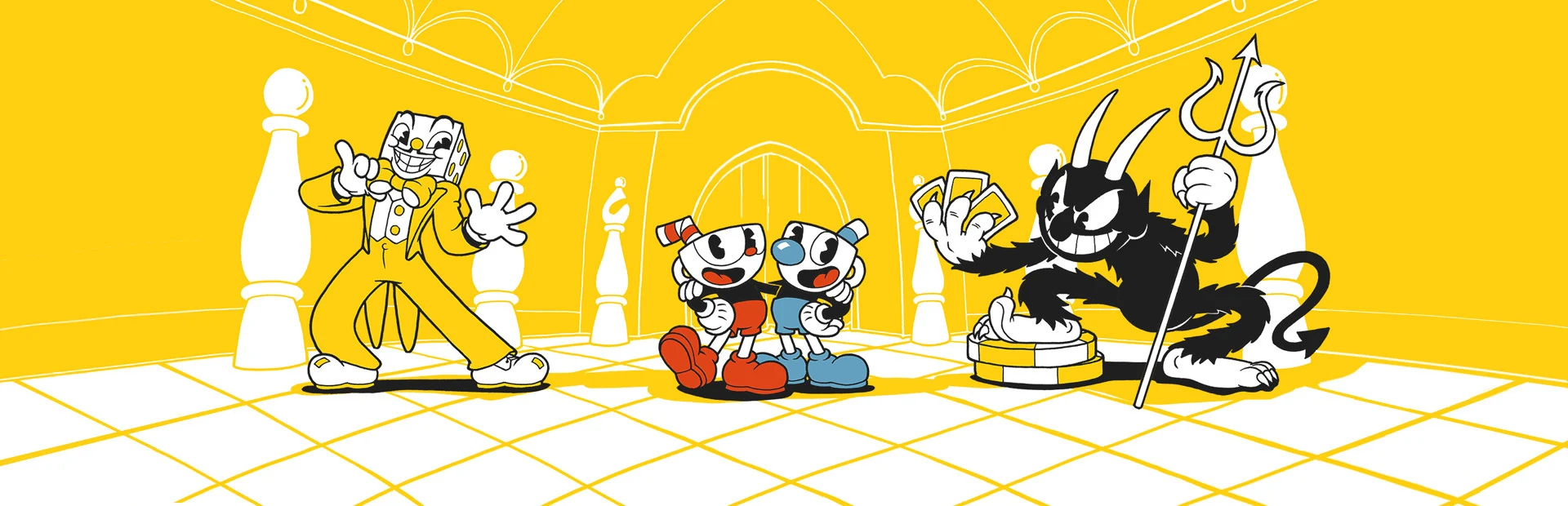
Game facts
- Developer
- Studio MDHR Entertainment Inc.
- Publisher
- Studio MDHR Entertainment Inc.
- Released
- 29 September 2017
- Platforms
- Windows · macOS (Steam edition)
- Model
- Paid game
- PEGI
- 7 · Fear, Violence — Steam UK listing
- Players
- Single-player · Multi-player · Co-op · Shared/Split Screen Co-op
- Length
- Medium
- Difficulty
- 5 / 5 · Demanding
- Steam Deck
- Verified
PEGI source ↗ · Steam Deck status source ↗
Edition: Base game
The score, explained
The interest and responsiveness of the core decisions and actions.
How progression, exploration and goals fit together.
The coherence of the visual, musical and narrative presentation.
How clearly the game explains its rules and offers useful ways to engage.
The depth of optional goals, alternative approaches and reasons to return.
The First Hours
Cuphead introduces its world through an accessible map, then concentrates the challenge inside individual encounters. A boss is rarely a single pattern repeated until its health runs out. Attacks, positions and even the form of the opponent change as the fight advances. The basic actions are straightforward: run, jump, aim, dash and recognise opportunities to parry pink objects. Applying them together is the demanding part. Weapon and charm choices give some room to adjust your approach, but they cannot replace learning what appears on the screen. The early fights make the product unusually easy to classify. This is an animation showcase built around repeated, tightly framed skill tests, with run-and-gun stages offering a related variation on the same need for precise observation.
Why It Works
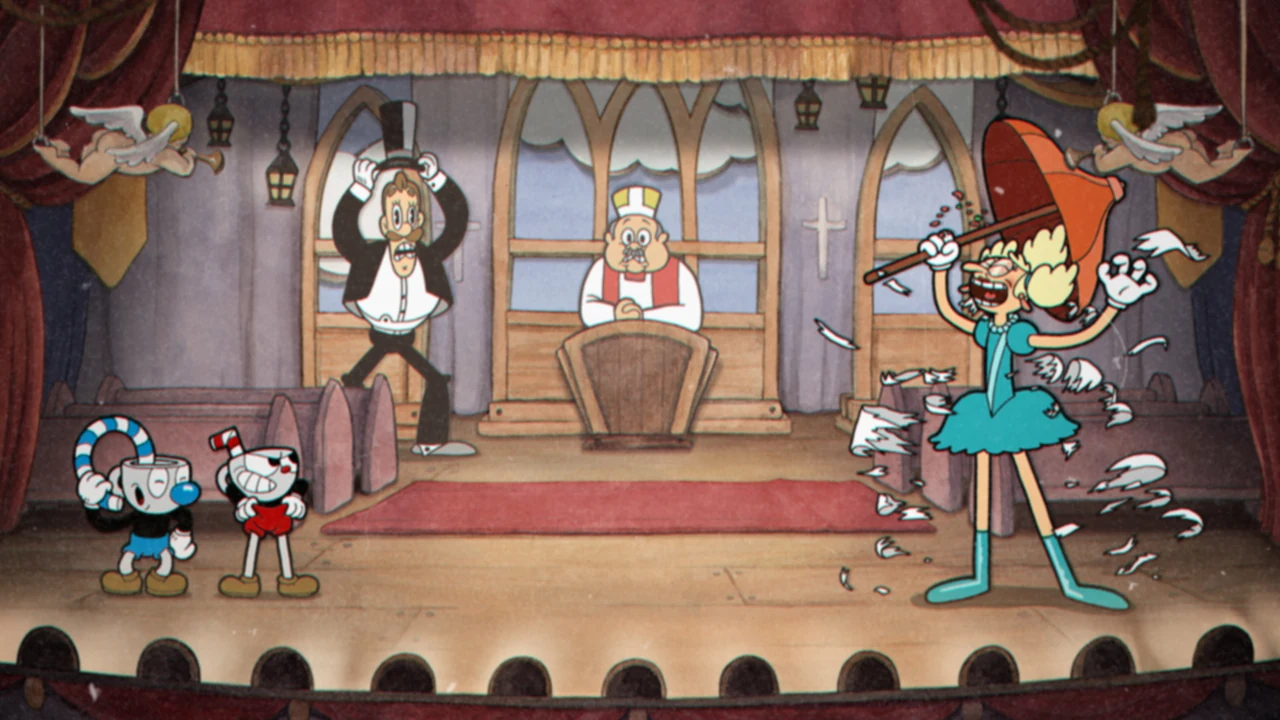
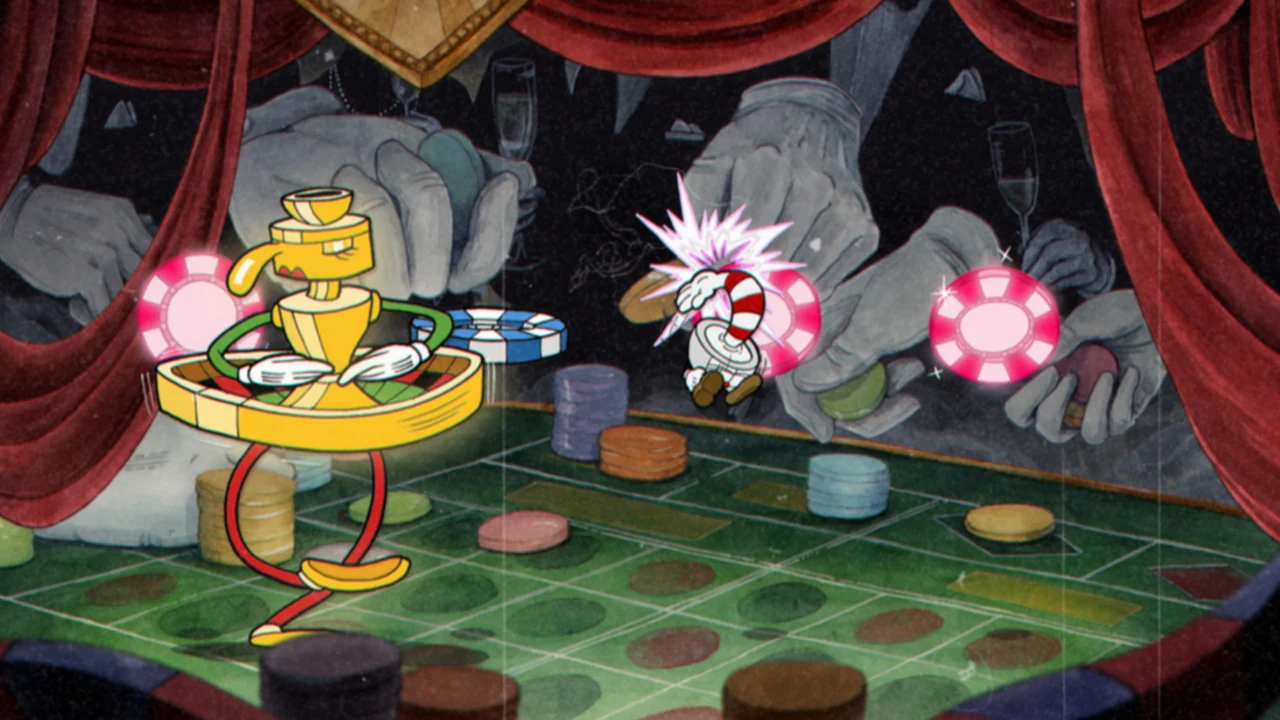
Its finest quality is the connection between personality and pattern. A boss has a recognisable comic identity, yet that identity also helps organise the attacks you must understand. The animation is lavish enough to be entertaining while the structure remains concerned with timing, spacing and recovery. Reaching a later phase turns curiosity into a practical reward: there is a new visual joke to see and a new problem to solve. Equipment choices can shift the balance between sustained damage, reach and comfort, giving the preparation between attempts some purpose. Local cooperation adds another layer because the shared encounter changes how players divide attention. Cuphead feels meticulously authored precisely because its spectacle is attached to distinct encounters rather than spread thinly across a very large map.
Where It Stumbles
Repetition is unavoidable when an encounter has not yet become readable. A later phase may arrive only after replaying an opening you already understand, and the pressure of reaching that phase can make a simple error feel disproportionately costly. The abundance of animation can also compete with the need to identify a particular projectile or safe gap. Choosing a different weapon can help with a specific problem, but it will not transform the overall demand. Cooperation should not be treated as an automatic shortcut, either; two players still need to coordinate movement and react to the fight. Readers who mainly want to enjoy the art should therefore take the challenge seriously before committing, rather than assuming the expressive presentation promises relaxed progress.
Who Should Play It
Choose Cuphead when learning an encounter is itself the desired activity. It suits players who enjoy noticing an attack cue, adjusting their position and eventually turning an intimidating sequence into something understandable. The appeal is especially strong if inventive animation makes those repeated attempts more enjoyable. Someone looking for an independent game primarily to explore at a leisurely pace will find better matches elsewhere in this catalogue. The key comparison is between collecting new sights and earning access to them through performance: Cuphead deliberately combines the two. If that bargain sounds attractive, its concentrated structure is a strength. If repeated boss attempts usually feel like a barrier between you and the interesting material, the same structure is likely to become the central frustration.
The verdict
Cuphead's animation invites attention, but its encounter design earns repeat attempts. Treat it as a collection of demanding boss problems and the appeal becomes much clearer than the cartoon appearance alone suggests.
Reasons to play
- Boss phases combine strong visual identity with changing attacks
- Weapons and charms offer useful tactical choices
- Local cooperation adds a different rhythm
Reasons to think twice
- Progress depends on practising difficult encounters
- Charming art does not imply an easygoing game
See the game
Assist & accessibility
Explore the available settings and control options on the official game page before choosing your setup.
Parents’ guide
Players: Single-player · Multi-player · Co-op · Shared/Split Screen Co-op. No in-game purchase marker in the checked Steam listing. Separate downloadable content may be sold.
Age classification: 7. Fear · Violence Steam UK listing
A useful starting tip
Watch a boss's attack sequence long enough to recognise a safe opening before trying to maximise damage throughout the whole fight.
A different direction
Compare this with Neva: A visually expressive companion adventure whose relationship changes alongside its dangerous world. A changing companion relationship gives the platforming journey a clear emotional centre.
Official sources
Reviewed: November 2026
You might also like
 DorfromantikRead review →
 PentimentRead review →
 TOEM: A Photo AdventureRead review →
REFERENCE CARD