Pentiment
Pentiment turns investigation into a question of whose account deserves your limited attention. Its historical setting matters because customs, work and relationships shape the evidence, rather than merely decorating it.
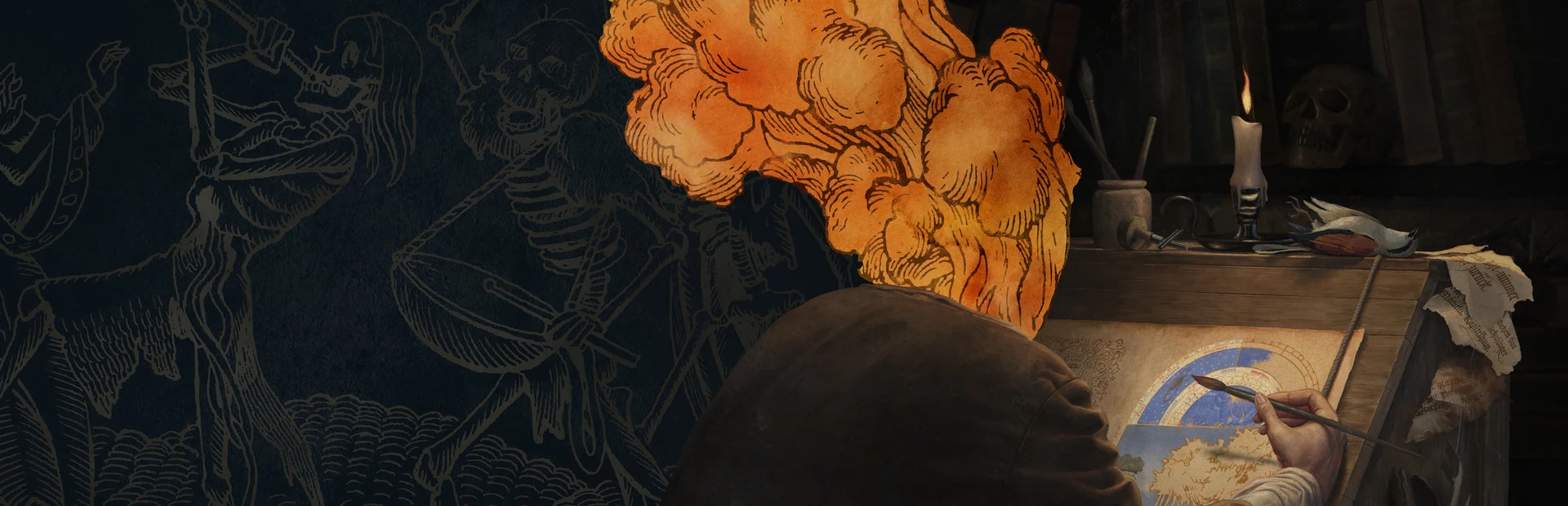
Game facts
- Developer
- Obsidian Entertainment
- Publisher
- Xbox Game Studios
- Released
- 14 November 2022
- Platforms
- Windows (Steam edition)
- Model
- Paid game
- PEGI
- 16 · Bad Language — Steam UK listing
- Players
- Single-player
- Length
- Medium
- Difficulty
- 2 / 5 · Approachable
- Steam Deck
- Verified
PEGI source ↗ · Steam Deck status source ↗
Edition: Base game
The score, explained
The interest and responsiveness of the core decisions and actions.
How progression, exploration and goals fit together.
The coherence of the visual, musical and narrative presentation.
How clearly the game explains its rules and offers useful ways to engage.
The depth of optional goals, alternative approaches and reasons to return.
The First Hours
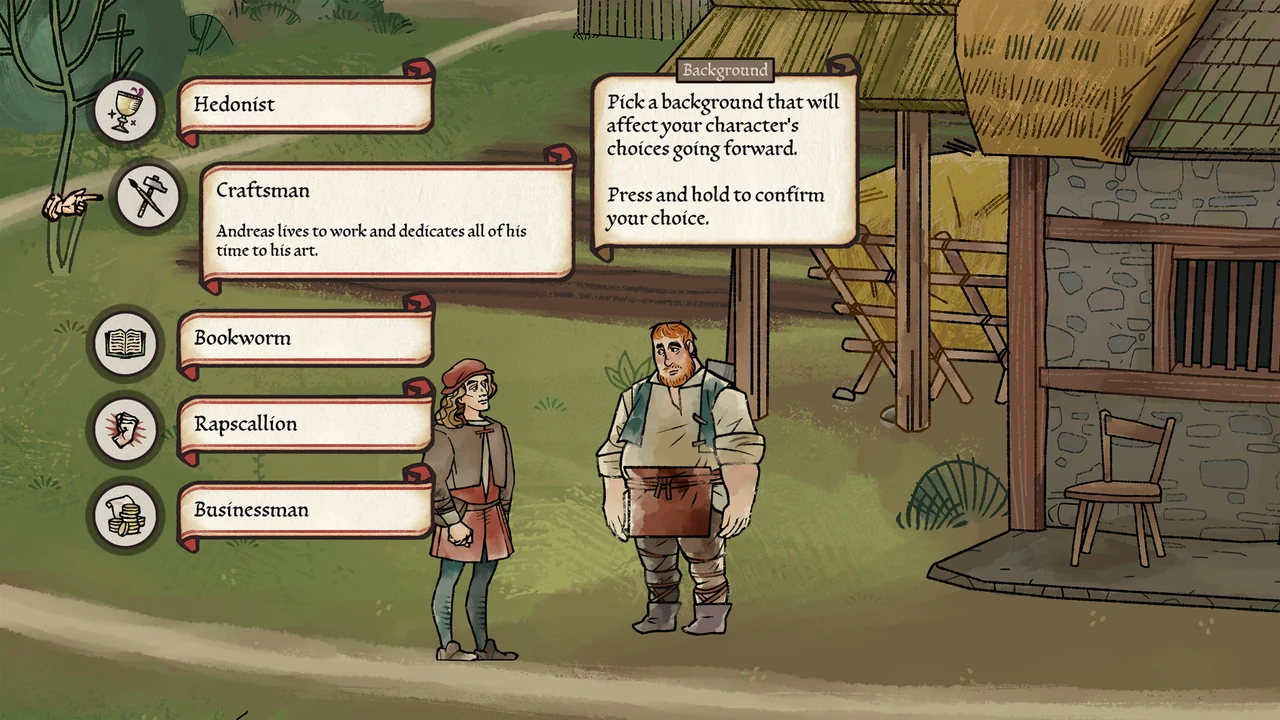
Pentiment begins with people and obligations before it becomes a matter of accusation. Andreas Maler works in the orbit of an abbey, and conversations introduce a community whose routines matter to the investigation ahead. The backgrounds selected for Andreas affect the knowledge and attitudes he can bring into dialogue. Exploring is therefore less about sweeping rooms for highlighted objects than deciding whom to visit, what to ask and how to interpret the response. Available time makes those choices consequential. A lead followed in one direction can leave another conversation unexplored. The opening establishes a useful expectation: this is a historical narrative in which understanding a place requires listening to its inhabitants, including people whose status or confidence initially makes their account seem authoritative.
Why It Works
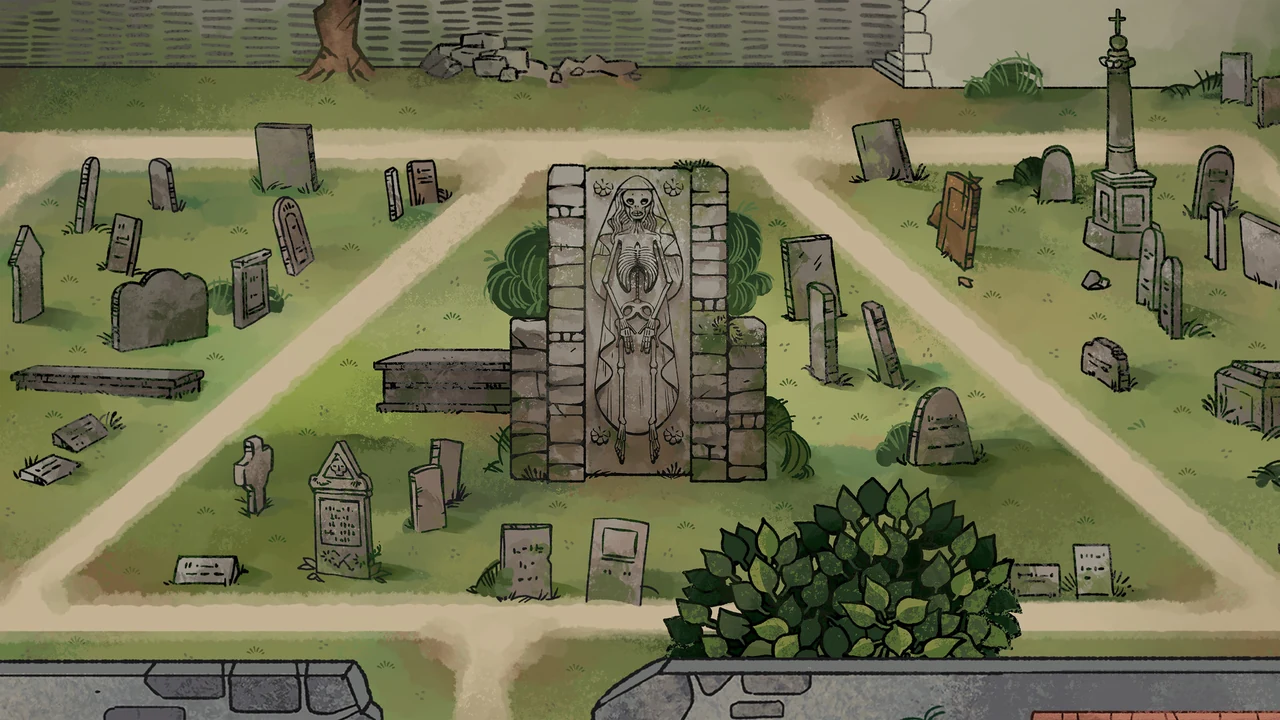
The setting does meaningful design work. Religion, labour, education and changing ideas affect what characters know and what they are willing to say. That prevents the investigation from becoming a detached logic puzzle with interchangeable witnesses. Pentiment also understands the force of returning to a community after decisions have settled into its history. Relationships and memories give later developments weight, even when the original choice was made with incomplete information. Its illustrated presentation supports this attention to perspective, with lettering and visual details contributing to the sense of reading different kinds of testimony. The result is an unusually coherent independent game: narrative structure, historical texture and the limited opportunities to investigate all reinforce the same question about how people decide what they believe.
Where It Stumbles
Certainty is not a dependable reward here. Someone approaching each investigation as a checklist that guarantees a definitive solution may find the available conclusions uncomfortable. Pentiment often asks for a judgement before every account can be reconciled, and a later consequence does not necessarily supply a neat answer key. The amount of reading also demands sustained attention. Character names, family connections and everyday disputes can become difficult to hold together when sessions are widely separated. Those qualities support the narrative, but they do not disappear because the writing is strong. The visual restraint can also make a long conversation feel static if your preferred kind of discovery comes through movement or physical manipulation rather than through listening and interpreting what somebody means.
Who Should Play It
This belongs in the catalogue for readers who want decisions to involve interpretation rather than optimisation. Interest in history helps, but curiosity about a community is more important than arriving with specialist knowledge. Pentiment is a good choice when you are prepared to follow conversations closely and accept that an informed judgement can remain uncertain. It is a weaker fit for someone seeking a fast mystery with a definitive culprit neatly confirmed after every clue. Give it a place when dialogue, social context and the passage of time sound like the main attraction. Its lasting distinction is not the quantity of choices offered, but the way a choice becomes part of the history that other people must subsequently live with.
The verdict
Pentiment turns investigation into a question of whose account deserves your limited attention. Its historical setting matters because customs, work and relationships shape the evidence, rather than merely decorating it.
Reasons to play
- Conversation choices express a particular perspective
- Time and social context make investigation meaningful
- Later consequences give the community continuity
Reasons to think twice
- Extensive reading is essential
- Uncertainty can survive even a carefully considered decision
See the game
Assist & accessibility
Explore the available settings and control options on the official game page before choosing your setup.
Parents’ guide
Players: Single-player. No in-game purchase marker in the checked Steam listing. Separate downloadable content may be sold.
Age classification: 16. Bad Language Steam UK listing
A useful starting tip
Choose the lead that best fits your current reasoning instead of assuming every possible conversation must be exhausted first.
A different direction
Compare this with Chants of Sennaar: Chants of Sennaar makes understanding other people the central form of progress. Its notebook turns uncertain observations into testable language hypotheses, giving patient deduction a clear structure.
Official sources
Reviewed: November 2026
You might also like
 DorfromantikRead review →
 CupheadRead review →
 TOEM: A Photo AdventureRead review →
REFERENCE CARD