Tiny Glade
Tiny Glade is strongest when treated as an expressive building toy. Its responsive construction tools turn small changes of shape and placement into attractive architectural details, without asking you to manage an economy.
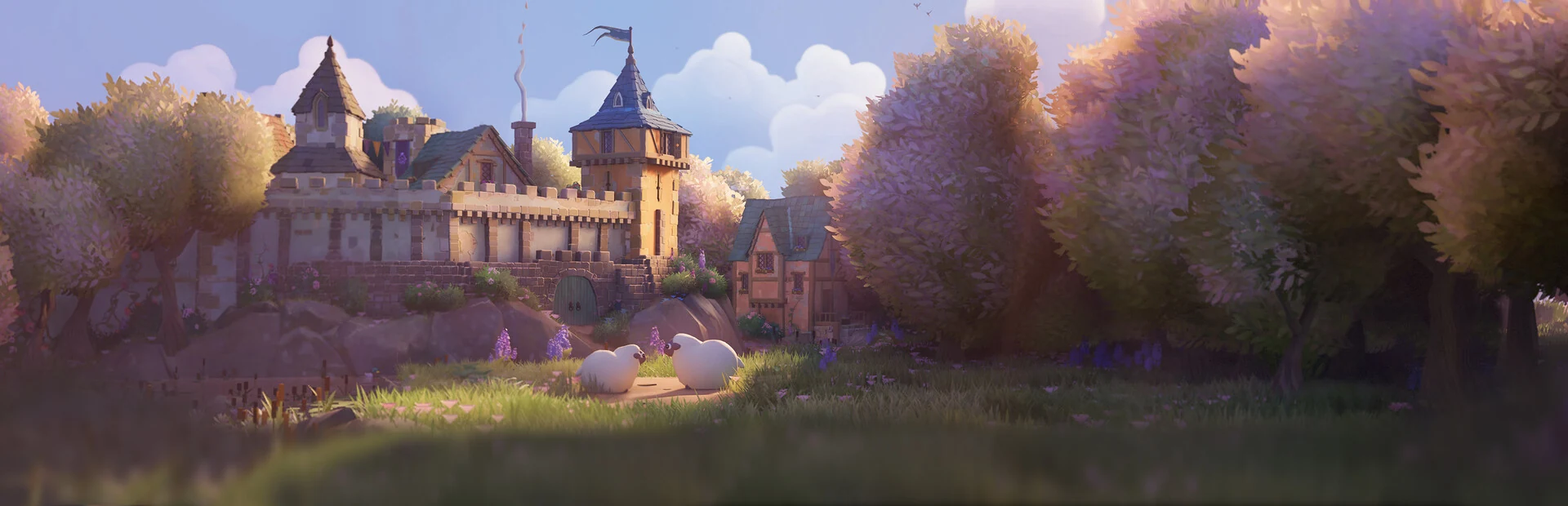
Game facts
- Developer
- Pounce Light
- Publisher
- Pounce Light
- Released
- 23 September 2024
- Platforms
- Windows · macOS · Linux (Steam edition)
- Model
- Paid game
- PEGI
- Not listed on Steam
- Players
- Single-player
- Length
- Short
- Difficulty
- 1 / 5 · Gentle
- Steam Deck
- Verified
PEGI source ↗ · Steam Deck status source ↗
Edition: Base game
The score, explained
The interest and responsiveness of the core decisions and actions.
How progression, exploration and goals fit together.
The coherence of the visual, musical and narrative presentation.
How clearly the game explains its rules and offers useful ways to engage.
The depth of optional goals, alternative approaches and reasons to return.
The First Hours
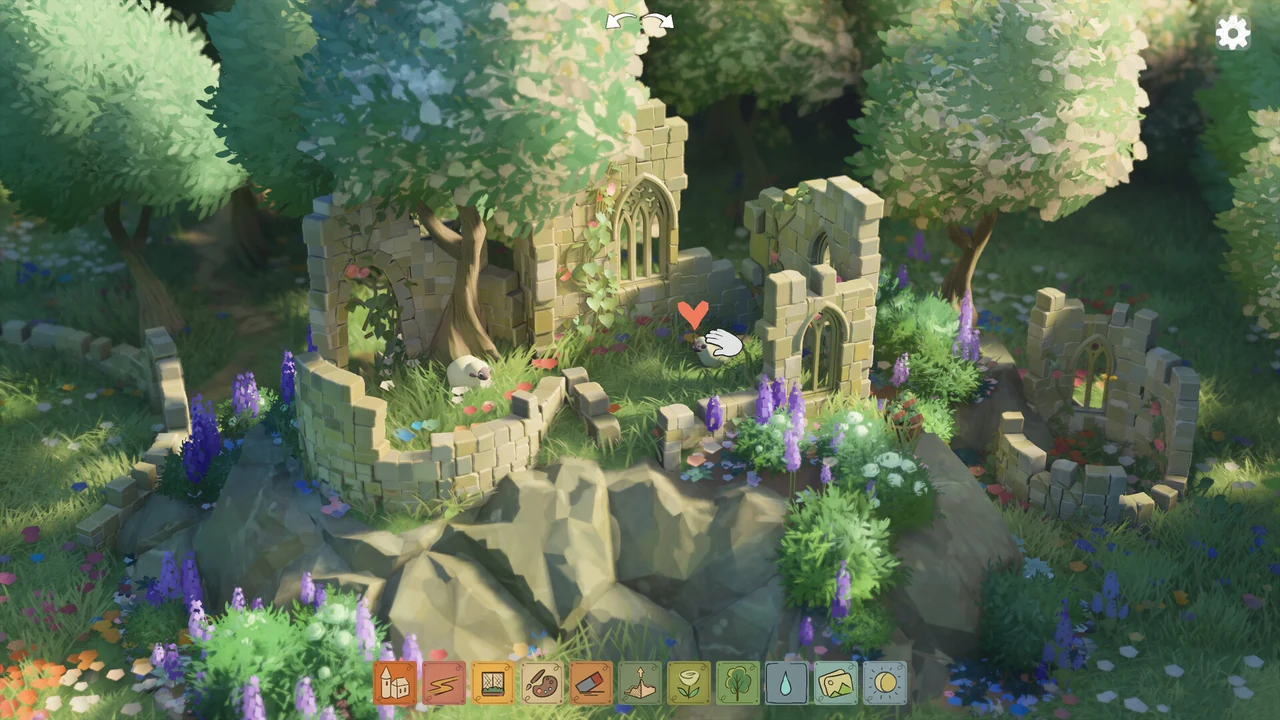
Tiny Glade begins with a landscape and the ability to change it. Walls, buildings, paths and other details can be shaped without first establishing an income or collecting construction materials. The interesting lesson is how these elements respond to one another. A change of shape or a path placed against a structure can produce architectural details that make the result feel more considered than the input required. That encourages short experiments: alter a tower, move a wall, look from another angle and keep the version you prefer. There is no campaign opening to work through before the main activity begins. The early appeal depends on whether making and revising a small scene is already enough of a reason for you to continue building.
Why It Works
Its most effective feature is the distance between a simple gesture and a pleasing result. The construction tools do not merely place identical pieces on a grid; they interpret relationships and add details that help the scene cohere. This makes experimentation rewarding even before you have developed a precise architectural plan. Because there is no resource economy to protect, an unsuitable idea can be replaced without turning the session into a recovery exercise. The landscape also provides a readable scale for the buildings, helping a small courtyard or cluster of towers feel like a complete composition. Tiny Glade earns its place in this catalogue as a focused creative tool. Its sophistication lies in how construction feels, rather than in how many administrative responsibilities it can attach to a settlement.
Where It Stumbles
Freedom can also mean a lack of momentum. A player waiting for objectives, residents or an economic problem to solve may reach an attractive scene and then wonder what the game expects next. Tiny Glade does not offer a city simulation underneath its detailed buildings, and its systems should not be judged as though that layer were merely waiting to unlock. The responsive tools can also interpret a relationship differently from the exact shape you imagined, requiring adjustments to work with their logic. There is pleasure in that process, but it is a particular kind of pleasure. Without an appetite for composition and revision, the available details can start to feel like variations on a limited set of activities rather than an expanding game.
Who Should Play It
File Tiny Glade alongside creative toys rather than strategy campaigns. It suits someone who enjoys arranging a scene, inspecting it from different viewpoints and changing a detail because the composition could be better. It can provide a comfortable alternative to games that constantly evaluate performance, although the absence of an imposed goal is only useful if you are happy to supply your own. Dorfromantik is the more directed choice when a building-like activity needs a clear placement puzzle and score. Tiny Glade is the better fit when those constraints would interrupt the idea you want to draw in space. The purchase decision should follow that distinction: its beautiful buildings are the substance of the activity, not scenery concealing a larger management system.
The verdict
Tiny Glade is strongest when treated as an expressive building toy. Its responsive construction tools turn small changes of shape and placement into attractive architectural details, without asking you to manage an economy.
Reasons to play
- Building tools react attractively to one another
- Free construction supports quick visual experimentation
- The lack of resource pressure keeps attention on composition
Reasons to think twice
- It supplies little external direction
- Detailed scenes are not a substitute for a simulation or campaign
See the game
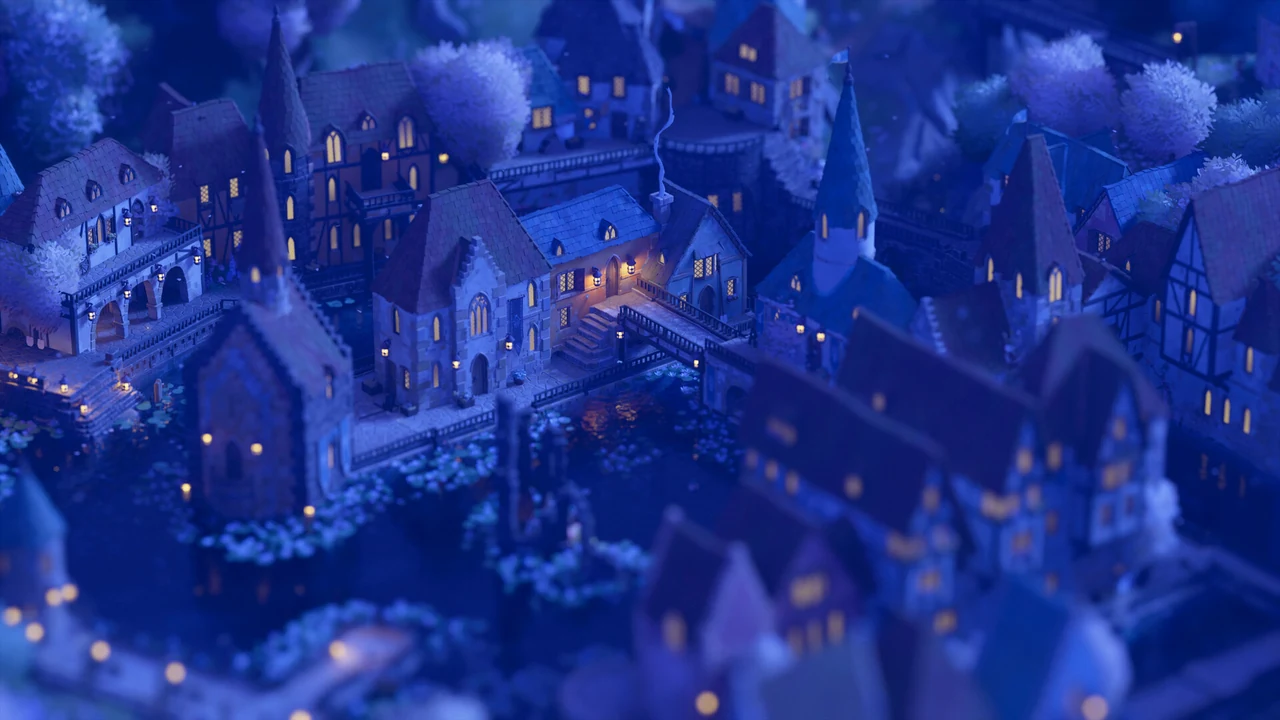
Assist & accessibility
Parents’ guide
Players: Single-player. No in-game purchase marker in the checked Steam listing. Separate downloadable content may be sold.
Age classification: Not listed on Steam.
A useful starting tip
Try running a path through an existing structure, then change its height to see how the building system adapts the details.
A different direction
Compare this with Dorfromantik: Dorfromantik makes a convincing case for a small idea developed with care: placing one tile can improve the view and complicate the next decision. Its scoring rules give the peaceful presentation a welcome backbone.
Official sources
Reviewed: November 2026
You might also like
 DorfromantikRead review →
 PentimentRead review →
 CupheadRead review →
REFERENCE CARD