Sable
Sable gives discovery a personal direction without making it an urgent mission. Its climbing, hoverbike travel and masks support a journey about choosing where to go and what kind of identity to bring back.
Game facts
- Developer
- Shedworks
- Publisher
- Raw Fury
- Released
- 23 September 2021
- Platforms
- Windows (Steam edition)
- Model
- Paid game
- PEGI
- 3 — Xbox UK edition edition; not a separate PC classification
- Players
- Single-player
- Length
- Short
- Difficulty
- 1 / 5 · Approachable
- Steam Deck
- Verified
PEGI source ↗ · Steam Deck status source ↗
Edition: Base game
The score, explained
The interest and responsiveness of the core decisions and actions.
How progression, exploration and goals fit together.
The coherence of the visual, musical and narrative presentation.
How clearly the game explains its rules and offers useful ways to engage.
The depth of optional goals, alternative approaches and reasons to return.
The First Hours
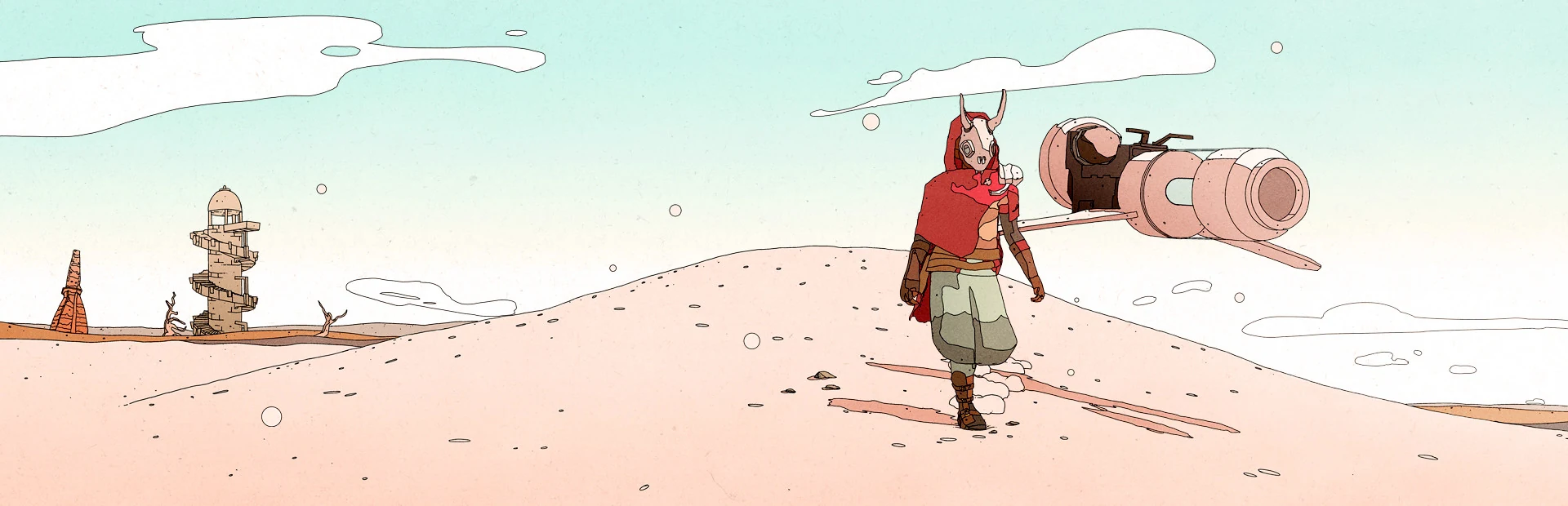
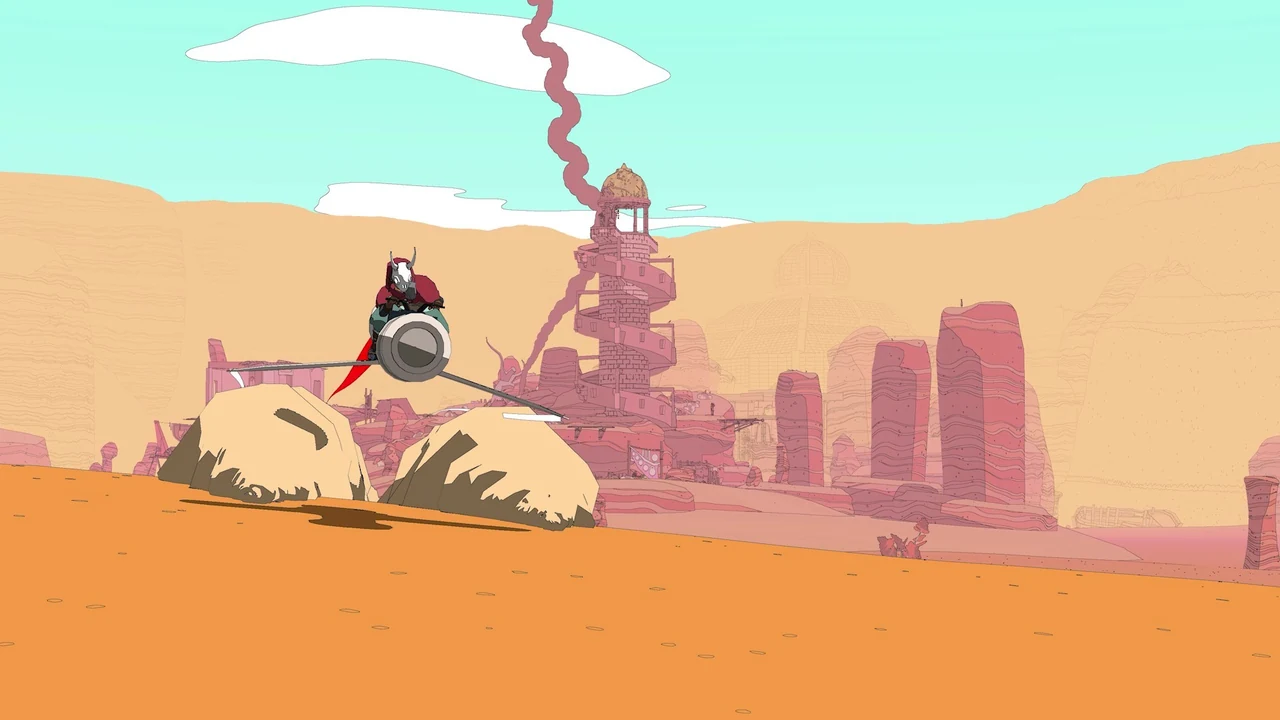
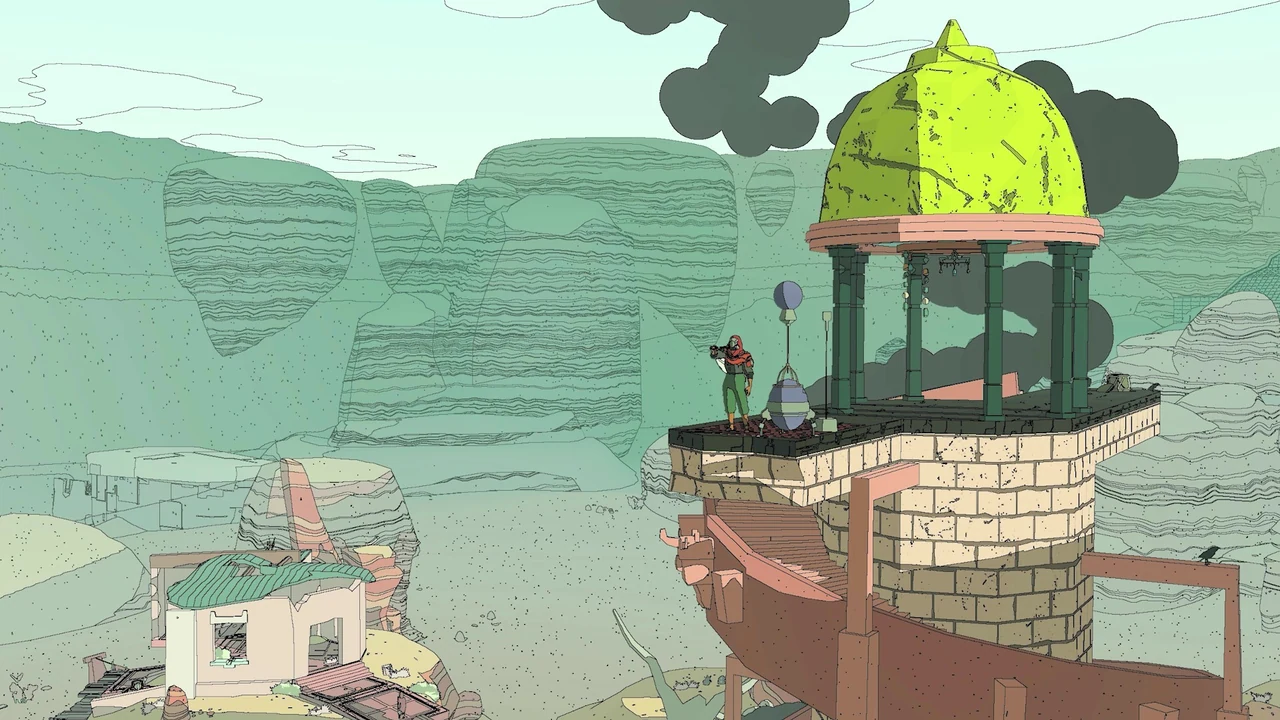
Sable sets its traveller loose on a gliding journey through a desert full of settlements, ruins and conspicuous shapes on the horizon. The hoverbike makes distances inviting, while climbing turns a promising structure into a place you can examine more closely. Conversations and tasks provide possible destinations, but the journey is not organised around a relentless sequence of emergencies. Masks and the people associated with them give exploration a connection to identity: meeting others can suggest a possible way to understand your own place in the world. The opening is therefore a test of curiosity as much as a tutorial. If an unfamiliar silhouette is enough to make you change direction, the landscape is already offering the kind of invitation on which the rest depends.
Why It Works
The difference between travelling and climbing gives discovery a useful rhythm. A distant structure first attracts attention as part of the landscape, then becomes a practical question about how to reach a particular ledge or entrance. The bike makes that change of scale quick enough to encourage experimentation, while the illustrated visual style gives each destination a memorable outline. Masks provide a more personal reason to pursue tasks than a simple rise in equipment strength. You are learning about possible roles rather than preparing for one inevitable final confrontation. Sable is strongest when those systems let a detour feel self-directed and meaningful. Its distinctive contribution to the catalogue is an exploration structure that makes choosing a destination part of the experience, not merely a step before the real activity.
Where It Stumbles
Self-direction can leave a session without an obvious shape. If none of the visible destinations immediately suggests a reason to travel, the freedom may feel less like possibility and more like waiting for the game to supply an objective. Climbing also asks you to read routes and manage the limits of your movement, so a striking building is not always as straightforward to explore as it first appears. The lack of a constant combat loop removes one familiar source of short-term rewards. That is part of Sable's identity, but it means the atmosphere and curiosity must do more of the work. Players who want increasingly powerful equipment and a tightly escalating campaign may find that the journey develops along a less immediately measurable axis.
Who Should Play It
Sable belongs with games that make wandering a deliberate choice. It suits someone who enjoys spotting a landmark, setting a personal objective and allowing an unexpected conversation or structure to redirect the plan. The coming-of-age premise gives that freedom a gentle context without turning every discovery into a compulsory chapter. Choose it when exploration itself is the desired activity, especially if you appreciate a world with a strong graphic identity. Choose a more directed adventure when a clear objective is necessary to make a session feel worthwhile. The important promise is not a desert packed with combat rewards. It is a landscape that gives you room to decide what deserves attention, then uses the journey to make that decision feel personal.
The verdict
Sable gives discovery a personal direction without making it an urgent mission. Its climbing, hoverbike travel and masks support a journey about choosing where to go and what kind of identity to bring back.
Reasons to play
- Open routes let curiosity set the itinerary
- Climbing and bike travel offer complementary perspectives
- Masks connect exploration to the coming-of-age premise
Reasons to think twice
- Progress can feel vague without a self-chosen goal
- A reader seeking frequent combat will find a different kind of adventure
See the game
Assist & accessibility
Explore the available settings and control options on the official game page before choosing your setup.
Parents’ guide
Players: Single-player. No in-game purchase marker in the checked Steam listing. Separate downloadable content may be sold.
Age classification: 3. Xbox UK edition edition; not a separate PC classification
A useful starting tip
Choose one visible landmark and investigate it fully before turning the whole desert into a list of competing destinations.
A different direction
Compare this with Jusant: Jusant makes climbing a complete subject rather than a shortcut between objectives. Hand placement, stamina and rope use give the tower a practical identity, while its changing spaces explain why continuing upwards matters.
Official sources
Reviewed: November 2026
You might also like
 DorfromantikRead review →
 PentimentRead review →
 CupheadRead review →
REFERENCE CARD