Thank Goodness You're Here!
Thank Goodness You're Here! builds its comedy around a town that keeps finding new work for a very small visitor. The short, tightly arranged errands make its local character more important than mechanical breadth.

Game facts
- Developer
- Coal Supper
- Publisher
- Panic
- Released
- 1 August 2024
- Platforms
- Windows · macOS (Steam edition)
- Model
- Paid game
- PEGI
- 16 — Nintendo Switch edition; not a separate PC classification
- Players
- Single-player
- Length
- Short
- Difficulty
- 1 / 5 · Gentle
- Steam Deck
- Verified
PEGI source ↗ · Steam Deck status source ↗
Edition: Base game
The score, explained
The interest and responsiveness of the core decisions and actions.
How progression, exploration and goals fit together.
The coherence of the visual, musical and narrative presentation.
How clearly the game explains its rules and offers useful ways to engage.
The depth of optional goals, alternative approaches and reasons to return.
The First Hours
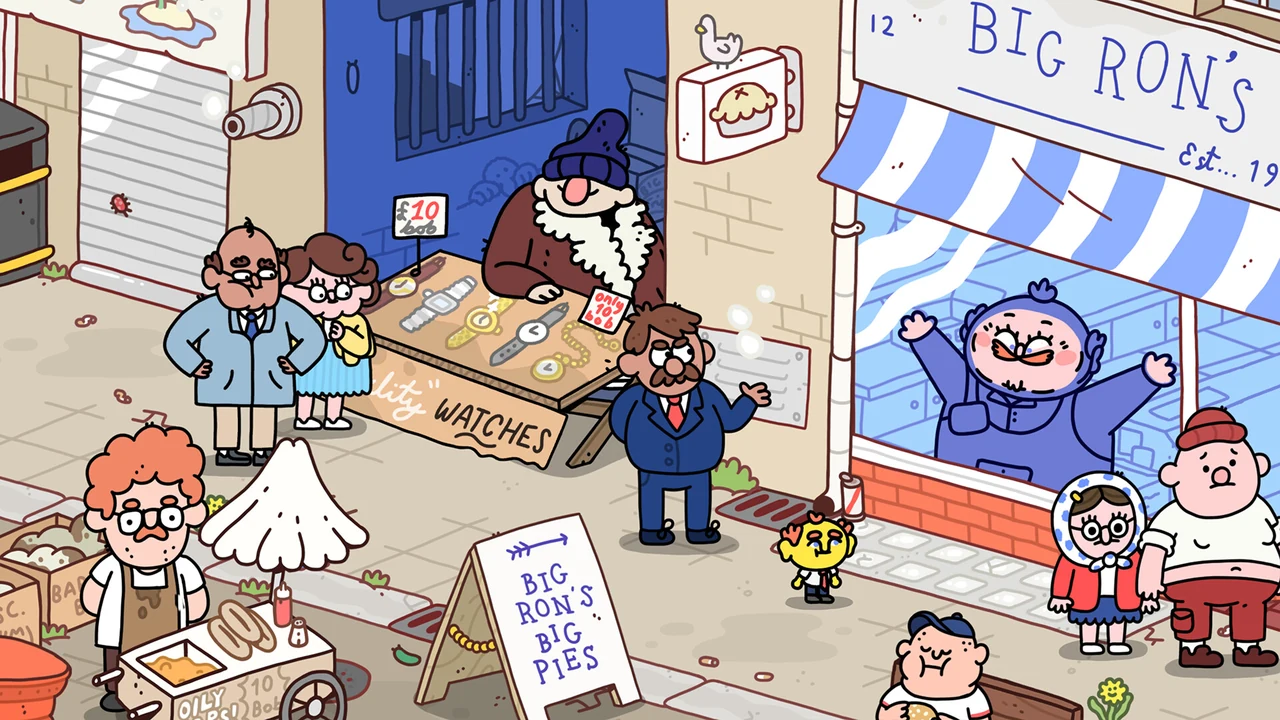
The visitor in Thank Goodness You're Here! arrives with an appointment and quickly becomes involved in the town's more immediate concerns. Wandering between shops, streets and cramped little interiors leads to odd jobs, and the small protagonist's basic interactions turn those requests into physical comedy. The controls are simple enough that the opening can establish the town's voice almost immediately. A task that initially resembles an ordinary local problem soon finds a more ridiculous direction, while familiar residents keep drawing the visitor into their business. The important expectation is scale. This is a compact comic outing, not a town simulator waiting to reveal a large economic system. Progress comes through participating in increasingly peculiar situations and seeing how the place reacts to your involvement.
Why It Works
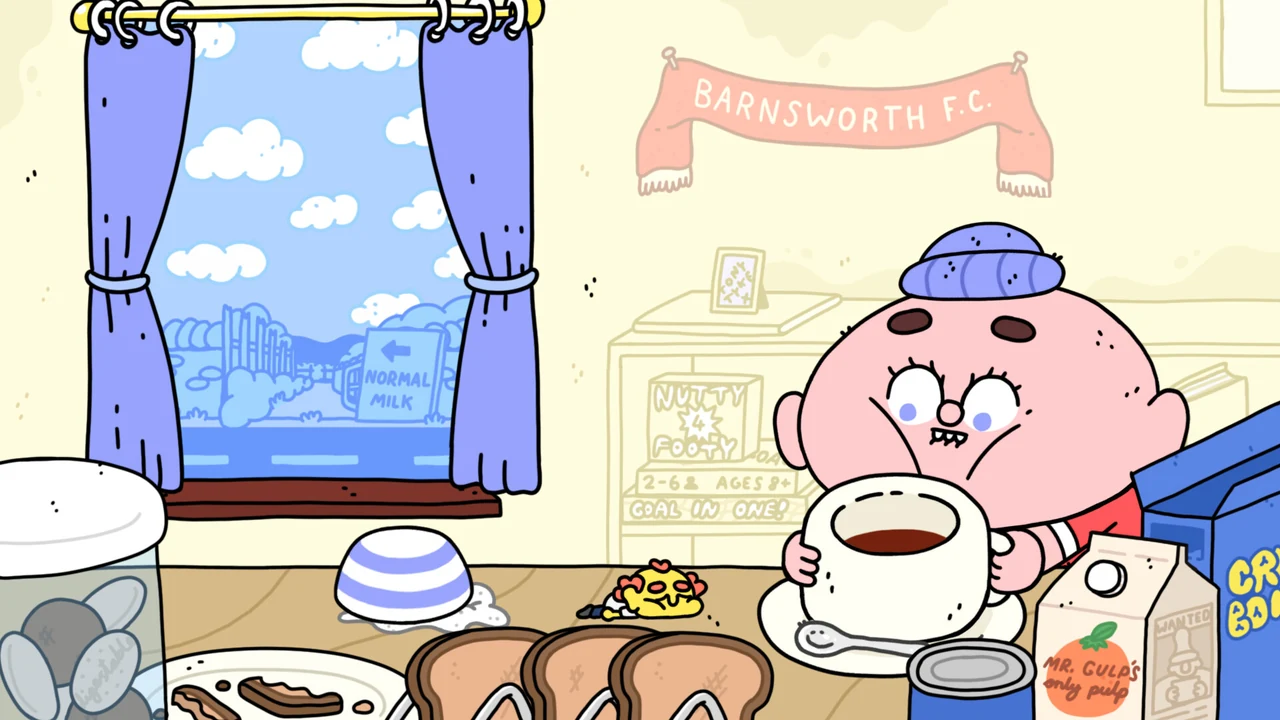
The town works because its jokes have an address. Shopkeepers, local habits and recurring spaces make the humour feel attached to a community rather than assembled from unrelated sketches. Returning to a familiar area can change the meaning of an earlier detail or reveal another consequence of the visitor's help. The protagonist's small size also gives ordinary objects a comic physical presence, turning travel and interaction into part of the performance. Hand-drawn animation and voice work carry much of the personality, but the game benefits from asking you to trigger events rather than only watch them. Its independent appeal lies in that specificity. It pursues a particular comic place and rhythm with confidence instead of widening the design until the setting becomes merely another colourful backdrop.
Where It Stumbles
Comedy makes the recommendation unusually dependent on personal taste. If the town's language, innuendo or escalating absurdity does not appeal, there is not a deep strategy layer underneath it to provide a separate reason to continue. The simple interactions support the timing, but they offer limited scope for creative problem solving. A second visit can reveal details missed earlier, yet many of the strongest surprises necessarily become familiar once the situations are understood. Its cartoon appearance also gives an incomplete impression of the material: adult language and humour are meaningful parts of the choice. Readers seeking a broad adventure with extensive customisation or a steady sequence of new mechanics may find that the focused comic structure has reached its conclusion before those expectations are addressed.
Who Should Play It
Choose it when you want a distinctive comic outing whose setting matters as much as the individual jokes. Enjoyment of local character, exaggerated everyday problems and physical absurdity is a better guide than a general preference for platform games. The compact structure can be an advantage if you want to finish something with a strong voice instead of maintaining another large ongoing game. It is less suitable if the main attraction must be demanding inputs or systems that remain interesting after the surprises are known. In this catalogue, its place is easy to explain: it commits to a specific experience and keeps the interaction in service of that experience. The decision rests on whether spending a short, strange visit in this particular town sounds appealing.
The verdict
Thank Goodness You're Here! builds its comedy around a town that keeps finding new work for a very small visitor. The short, tightly arranged errands make its local character more important than mechanical breadth.
Reasons to play
- Recurring locations let jokes build on earlier visits
- Physical interaction gives the comedy a playable rhythm
- The town has a sharply specific voice
Reasons to think twice
- The humour is a decisive personal preference
- The cartoon style should not be treated as an age recommendation
See the game
Assist & accessibility
Explore the available settings and control options on the official game page before choosing your setup.
Parents’ guide
Players: Single-player. No in-game purchase marker in the checked Steam listing. Separate downloadable content may be sold.
Age classification: 16. Nintendo Switch edition; not a separate PC classification
A useful starting tip
Give a completed task's aftermath a moment before rushing away; the town's reactions are part of the point.
A different direction
Compare this with TOEM: A Photo Adventure: TOEM makes photography useful without turning it into a technical simulation. Its small scenes reward patient observation, and the modest scale keeps the search for a subject pleasantly focused.
Official sources
Reviewed: November 2026
You might also like
 DorfromantikRead review →
 PentimentRead review →
 CupheadRead review →
REFERENCE CARD